Blog

Puzzles

I recently finished the draft of the second book in my chapter book series. I set it aside for a bit and am now doing a second pass, filling in some parts, noting parts that need more research, and fixing some errors. I try not to get bogged down in editing on the many passes I make at a story, but it happens anyway, so yes, I am also editing as I go along.

Once I am happy(ish) with it, the book will go to a real editor. I don’t do this for short stories, but for anything longer, I hire an editor before I submit to publishers. It always makes for a better book! Editors are the best – they’re like your favorite teacher and fresh cookies somehow rolled into one person!

This book is intended to be one in a 5-book series for early readers, other children, and for reading to children (okay, anyone 4 and up). All of the working titles use alliteration to identify a letter for a word scramble. The last title is also an answer to a puzzle in the books, and it’s a bit of a surprise in the greater story arc, so I will just give you the letters for now:

  • T
  • E
  • U
  • Q
  • S

What do you think the word is?

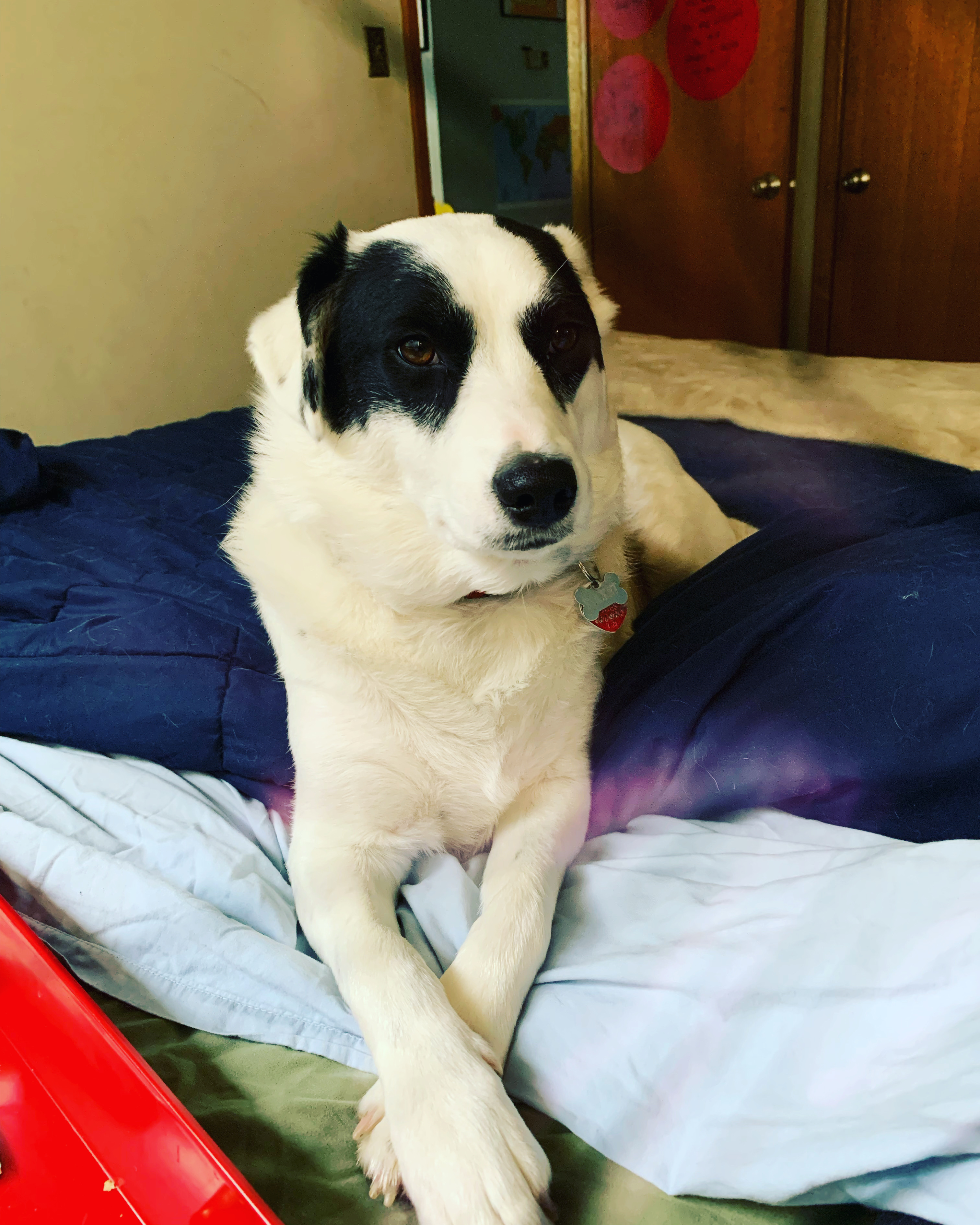
Just for fun, here’s a picture of my dog, Rocket. Sometimes I read my stories to her.

Rocket the Wonder Dog, my first reader

Break Barriers: Art Without Limits

A long time ago, I spent many hours discussing the philosophy of making art with my friend Jon Frank. We talked about many things, including what tools we thought were and were not acceptable. I think about these conversations often, and how my outlook has changed since those days. Now, I might say “Use whatever tools are available to you – just use them safely, kindly, and with care.” It’s possible that this change came about because too many kids in my circle seem to think they aren’t really making art if they’re not doing it from memory. I don’t know how this idea became popular, but it creates a barrier between the artist and their creativity. Even the Old Masters used models.

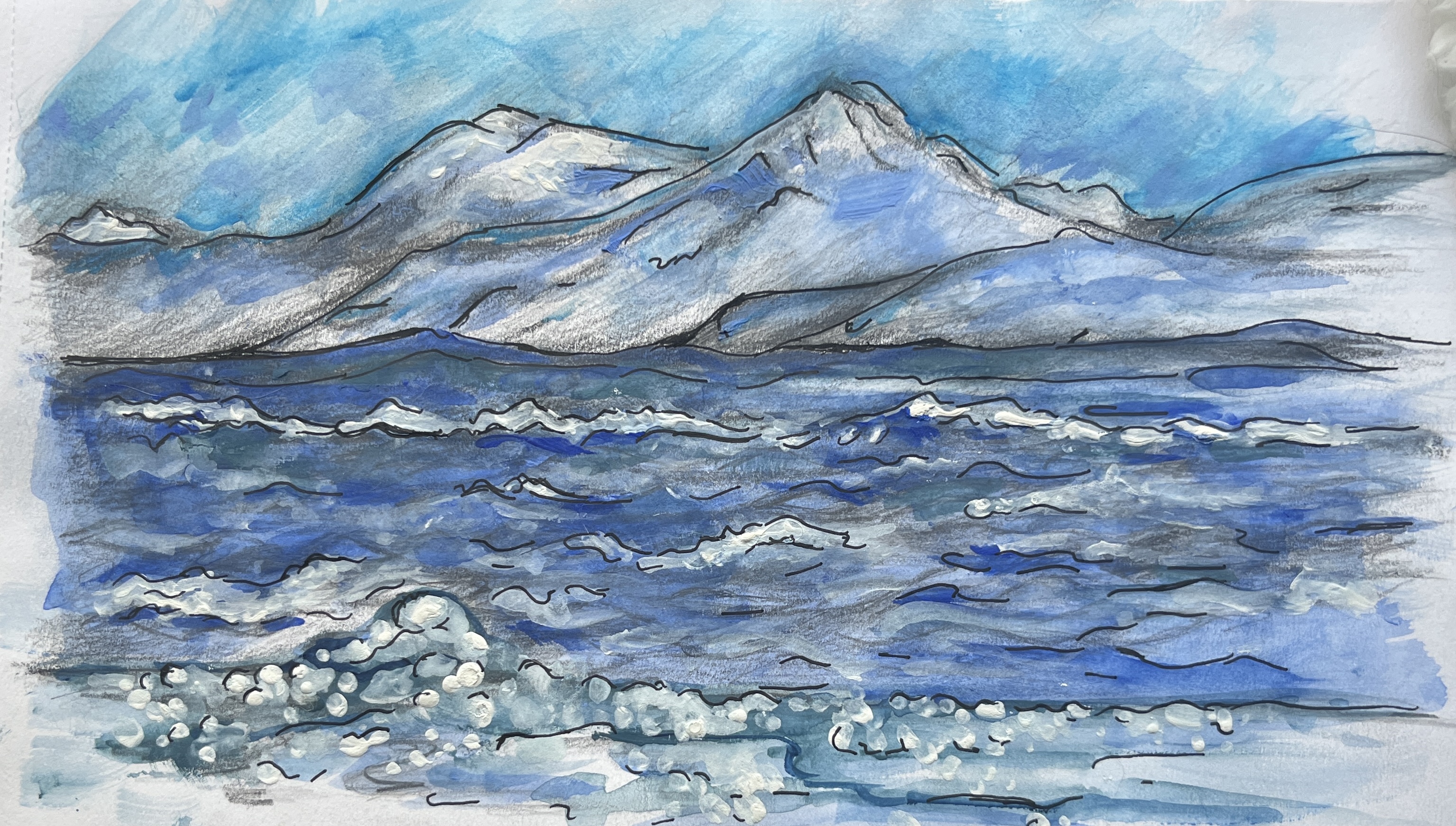
I doubt that any of my art or stories will ever be considered “masterpieces”, but I plan to cut myself some creative slack moving forward. I want you to do that too. I want all of us to make as much art as possible in the year ahead. Let’s use all of the tools at our disposal to try to make the world a little better, a little more beautiful, or little kinder. Let’s make art, crafts, stories and whimsies without stopping ourselves with worries about whether it’s “good” or “bad”. There are people in this world who do horrible things; let’s strive to be a little “army” of fun, creativity, joy, beauty and understanding (it’s okay if being true to yourself means making dark art too; someone might feel less alone because of it). So, to start, here’s a small piece I finished late last night. It’s a small tribute to the friend I was with when I saw this view and to Jon and his early work.

A small water color and ink, about 5 by 8 inches, by db mcneill (aka “buckheister”)

Hello Friends!

Hello & to everyone in the US, I hope you had a pleasant fall break.

I have been battling serious burnout due to things that aren’t my stories to tell. I haven’t posted anything new on Kofi for a bit, and I am sure my, uh, zero subscribers have been disappointed! Ha! Nonetheless, I am going to keep Kofi set up so that a single smackeroo (given just one time) gets you access to everything. That setting will stay in place until I can add content again regularly.

I had a snafu updating my website & lost some posts. Soooooo if you missed it, I had two stories published late last year (last year is 2022, for all you timelords & travelers). “How the Women became Lemon Trees and all your Daughters became Lemons” came out in the North Carolina ‘zine Corner Bar in October. “The Perfect Life” showed up in the Out of Darkness Anthology from Wolfsinger Publications in December.

I am still writing & drawing but haven’t shared much publicly. I’m only writing here today because Monday is usually my housekeeping day but we’re having a new heating & air system installed. It’s dusty work & housekeeping seems pointless. It’s noisy & expensive work too, so the burnout probably won’t ease up at least until the noisy bit is done. Wish me luck on that & if you don’t know about autistic burnout, well, that’s nice (also, keep reading).

In the meantime, if you are Christmas shopping, I would love for you to check out my shop on RedBubble. Or if you’re looking for books, maybe my middle-grade/young adult sci-fi fairytale -or the cute scene-story my eldest spun when he was merely 4 years old -is right for someone on your gift list. The books are both from the early days of self-publishing & the scene-story still looks like it, but honestly, I think that’s charming. Maybe you do too.

If you want to learn more about autistic burnout, you can start here. My symptoms are mostly physical & focus-related. I am safe. But I am very, very tired inside my brain. Nevertheless, I still like being an adult better than being a kid and being a mom better than not being a mom, even though some days I wish I could turn everything and everyone off for a bit.

I wish you the happiest of holidays, whatever you celebrate during this season of darkness.

Photo by Simon Berger on Pexels.com

About a Book – The Annual Migration of Clouds by Premee Mohamed

Have you read The Annual Migration of Clouds? When I picked it up, I had read the Beneath the Rising series (aka The Void books), a Lovecraftian horror that can also be read as a metaphor for colonialism (and yes, I am still sad about Benjamin Franklin the Octopus). I’d read The Appletree Throne and The Ants of Bimbleby Hill, which left me wondering if the author was secretly channeling the ghost of a very old Bristish man. I knew I liked Premee Mohamed’s work. But I was utterly unprepared for Clouds.

I think The Annual Migration of Clouds might be the most profound & beautiful book I have ever read. When I finished the audiobook, I did something I have never done before – I immediately bought the physical book. I mean this quite literally. The “we hope you enjoyed this audiobook” verbiage was still playing when I knew I needed the physical book, went online, and got it. I needed to be able to hold the book, to see the words, to spend time with the shape of the sentences.

If you haven’t read it, oh, you’re in for an amazing time. The story, set in the near future, isn’t going where you think it’s going. And I don’t mean it’s twisty – it simply isn’t going where you think it is. Some readers will be unhappy to not know “what happens next” and if there is a sequel, I will read it, but I hope there never is. The book’s ending is masterful, and the question “now what?” is appropriate to ask in the greater context of the story. It’s post-apocalyptic climate-change fiction, but that doesn’t mean what you might think it does. I cannot improve on the author’s blurb on this book, which you can read here: The Annual Migration of Clouds | Premee Mohamed

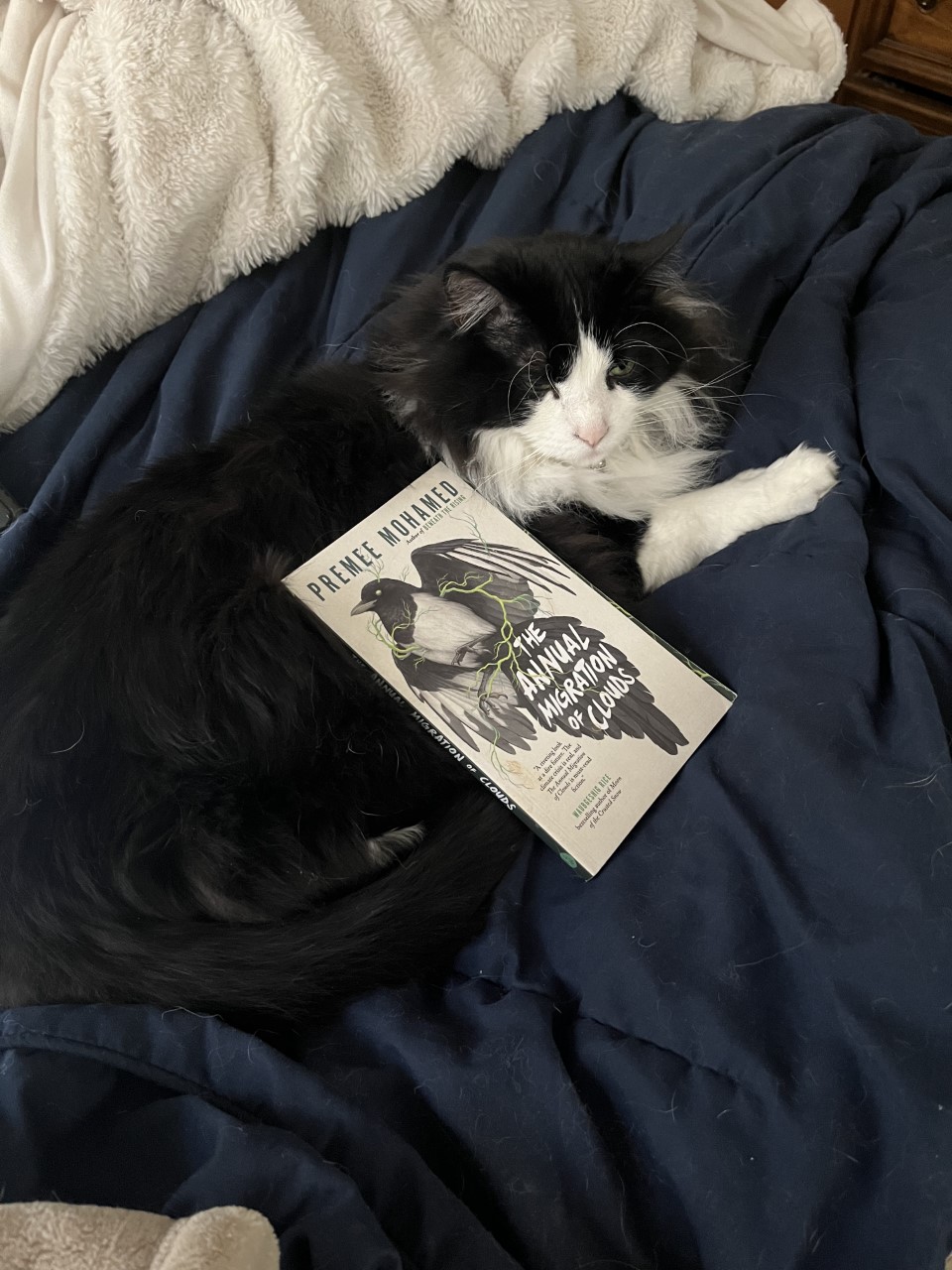
I hope Clouds becomes assigned reading in high schools everywhere. It will speak to GenZ & Gen Alpha as directly as Catcher in the Rye spoke to generations past. And more students will get to interact with Premee Mohamed than anyone ever got to interact with J.D. Salinger. You need The Annual Migration of Clouds on your shelves. Oh, and cats like it too.


Welcome to the Funhouse

I’ve always been weird. As a child, I had a sense of being different, apart from the norm in some undefined way. Some of the people I felt most connected with shared this sensation, and as we grew older, these friends had their “aha” moment when they realized they were part of the LGBTQIA community. I thought, “That must be it for me too!” So, in my early 20s, I dated a smart, funny, beautiful girl who I liked a lot. But when things became physical, I learned I was absolutely, 100% straight. I didn’t handle it well, meaning I didn’t handle it all. In modern parlance, I ghosted her. I was embarrassed and afraid and she deserved better. Somewhere out there is a lovely person to whom I owe an apology. And honestly, I really should have had some idea by then what was up with me, and it wasn’t that.

We didn’t know much (or anything) about neurodivergence back then. Some kids went to “special” classes and some didn’t. And that was that. Anyone who openly struggled – in any way – was likely to get lumped in together with kids who struggled in wholly unrelated ways. That didn’t happen to me. Therefore, I was fine in the eyes of everyone who had a say in my education. If I were a kid now, it might clue someone in that I thought “What do you think happens when we die?” was an acceptable way to start a conversation with a child I’d just met. It might raise some eyebrows that I could sit still for hours, gently rubbing moss, saying nothing, waiting for animals to come around. My certainty that my dolls were going to kill me in my sleep and that Danny was moving around in my Partridge Family poster while I was at school would at least get me a session with the school counselor (I swear, that picture of Danny was evil). But that’s not how we did things then, and I honestly have no idea if I would have been better off or worse if I had received that kind of attention.

I was so imaginative that I could see what my mind created, but I was also incredibly literal. I sometimes still struggle with this. If it’s not a combination you experience, it can (apparently) be difficult to understand. My emotions tend to be enormous, but I have now lived long enough that perspective is in play and I can (usually) stay quiet when this leads to destructive places.

I still don’t know how my neurodivergence would be classified. I often suspect anything that isn’t well understood gets tossed into the big bucket labeled “autism”. I’m guessing I’d get tossed in there too. I like almost everyone I meet whose neurodivergence has that label, and I understand and appreciate a lot of the humor and nonverbal communication that happens in the autism community. Whether it’s an accurate self-diagnosis or not, it’s a community that has given me acceptance and love, and I am grateful for it.

I have also suffered from depression, off and on, starting in my teems. A lot of this was situational, though not always. After sitting in several exposure therapy sessions for my child with OCD (which is neither cute nor quirky in real life), I realized my depression was probably the result of how I handled my anxiety. It was good to understand more of my historical behavior and why my attempts to make it better (over and over and over) inevitably made me feel worse. It also helped my doctor find a good medication for me. Things have been much easier since that happened! (I hope for some similar experience for my kid, but his is not my story to tell).

Add to all of this a frontal lobe injury from being rear-ended by a drunk driver over 20 years ago. My head injury often mimics ADHD, but despite not having the best executive function skills, having huge emotions, and being a bit day-dreamy even before the accident, I don’t think I have ADHD. I could be wrong. Nevertheless, my brain injury helps me understand my family members with ADHD just a little bit better. Managing impulsivity through conscious thought is a whole education in itself.

All this to say, it’s a tilt-a-whirl in here. I have a head injury. I am neurodivergent. I probably have as much alphabet soup going on as the most alphabet-soupy member of my family. I take medication for anxiety, and I am just doing my best to move forward through this thing called life. I am glad I’m still here. I’m glad I’m a parent to three beautiful boys – two of whom I grew inside my body, which was super-duper weird. I like watching squirrels play and trees dance in the wind. I don’t so much hope for the future (especially now) as I simply do what I do. Every day, I try to be a little more me and a little less a disguise I learned to get by.

If you feel strange and separate, you are not alone. Try to lean into your unique way of experiencing the world and celebrate yourself. I hope we all get to smile like the Fairuza Balk as Nancy in The Craft, when she says “we are the weirdos mister” (but you know, not for exactly the same reasons).

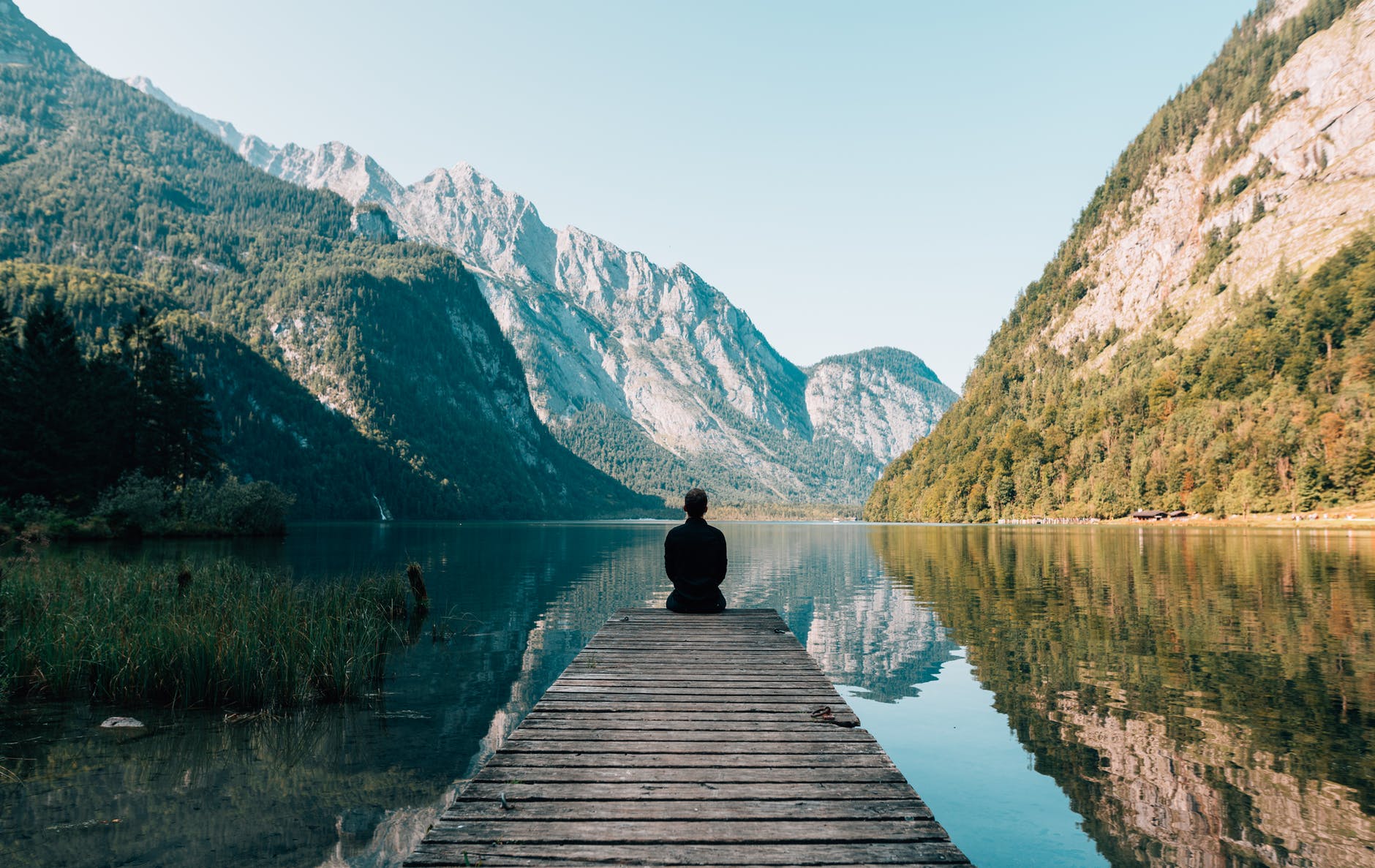
a person sitting on wooden planks across the lake scenery
Photo by S Migaj on Pexels.com

If you are a young person in the LBTQIA community who needs emotional support, The Trevor Project is a good place to start.

If you are neurodiverse person or caregiver of a neurodiverse person looking for resources, Understood.org is a helpful place to find this.

If you are mentally ill or are a caregiver for a mentally ill person in the US, NAMI offers regional support groups and guidance.

If you are depressed and in crisis, don’t be afraid to call 988.

Clarion West Write-a-Thon Flash Fiction Workshop

We’re in week two of this summer’s Flash Fiction Workshop. I’d heard it could be intense but it’s turning out to be just right for me. It helps about half of my group isn’t active, leaving four stories to read & critique each week, instead of 10. Of course, there’s still a story to write each week too, but the prompts are great and I’m having a blast. It’s helpful for me to have work that’s on a deadline, so I don’t aimlessly wander the seas of time, and I’ve sent out more stories for publication (or, you know, rejection) this month than I did in the previous three years.

If you want to support ClarionWest & make me look good while doing it, you can make that happen here or you can help me keep doing what I do here: https://ko-fi.com/dbmcneill

Clarion West Write-A-Thon

I am excited to be participating in the Clarion West Write-a-Thon this year. If you want, you can donate here to support Clarion West workshops and outreach & help me reach my modest fundraising goal. If you want to register to write along with me and others, go here.

I learned about this event through the perks of being an alumnus of the wonderful Writing the Other program.

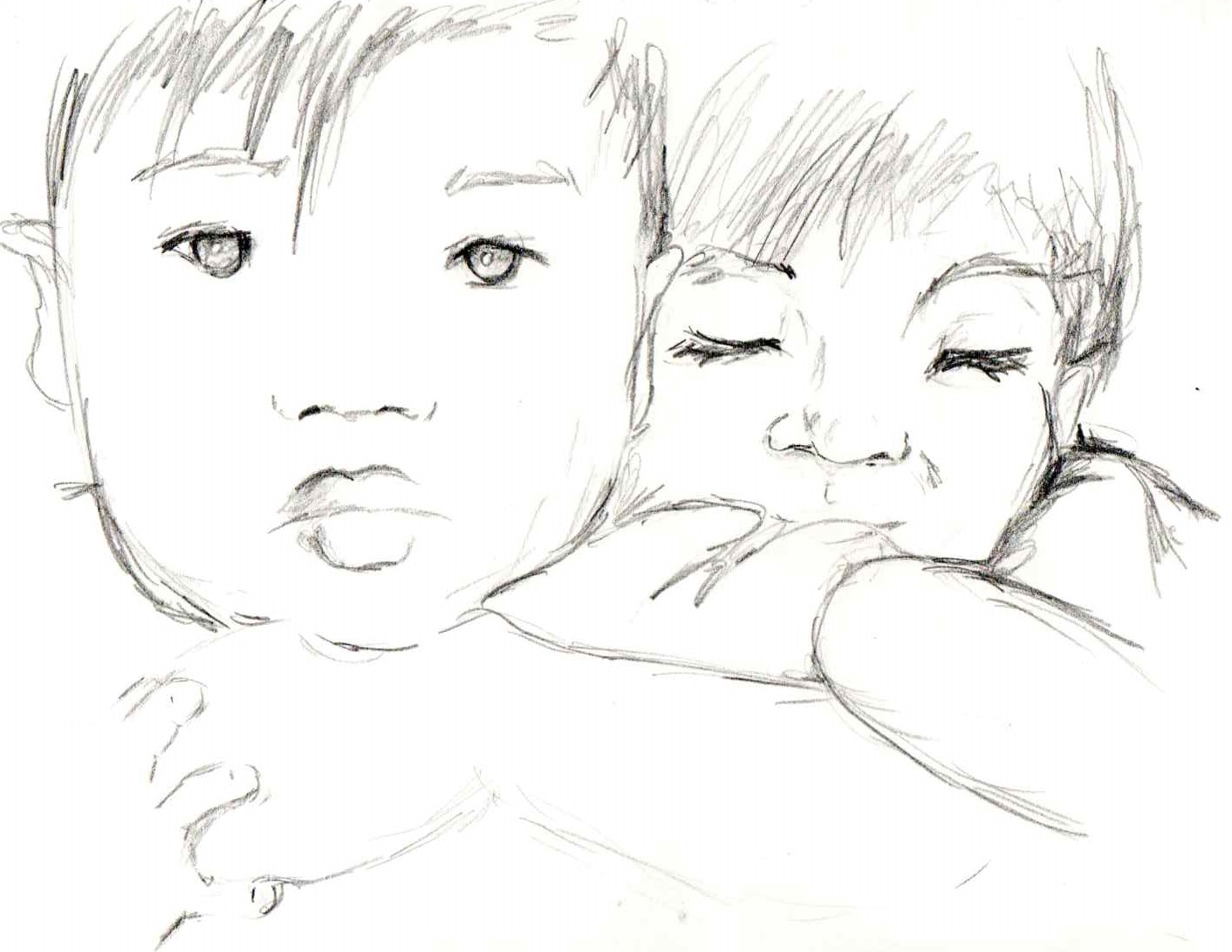
Here is a picture I drew of my eldest & middle son back when they were much littler people, so this post does not look bland, because it isn’t. IT’S AWESOME.

Brotherly Love, pencil & pen sketch on paper

New Red Bubble Shop

Howdy!

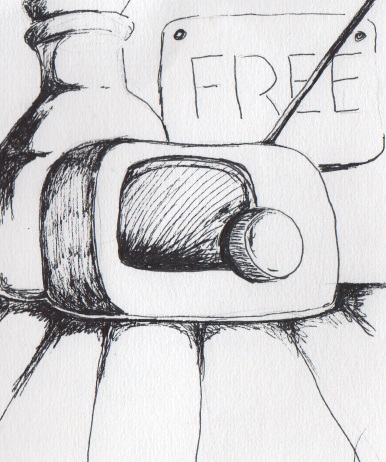
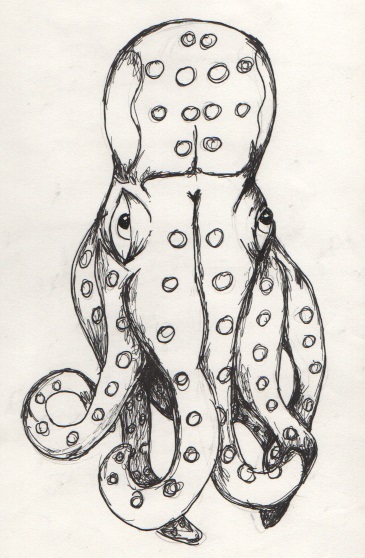
If you like my art (see slideshow below), you might want to check out my Red Bubble shop. I ordered a few things from it to give as Christmas gifts & was very happy with them. The search function is a little odd because “all products” isn’t all products, so if you want something specific & can’t find it, drop me a comment. I’ll let you know how to find it, add it, or explain why it isn’t possible (I might need a higher resolution image than I have the ability to make, for example). I’m thinking of adding some products with my youngest sons’ monster drawings too. He’s a great monster creator!

Did you get or give any art for Christmas? Or anything featuring artwork? I’d love to hear about it!

My Mutterings about Decluttering

If you follow me on Twitter or Instagram, you know I completed my second Inktober this year. It was a wonderful experience, drawing daily, and I enjoyed reacquiring old skills and learning new ones. The prompts kept me going when I ran out of creative steam. It was great!

I want to start a practice of writing most days (again) too, but it’s been a challenge. I can chat with my kids when I draw, but I can’t write and talk and listen at the same time.  NanoWriMo, though inspiring, isn’t quite right for me (at least for now). So, I’ve been trying to carve out a semi-sacred space where I can write in relative quiet. To that end, I have been decluttering. And decluttering. And decluttering. All that, of course, is tied up with work and parenting during a global pandemic. Now, holidays are in the mix as well, so I’ve been studying decluttering too, because all these things need to be simpler for me.

Recently, I read the life changing magic of tidying up by marie kondo. It’s a fascinating book, part confessional, part manifesto, confident in its requirements. I’m not interested in joining the on-line haters of a tiny cheerful woman, but I know her advice won’t work in every home, despite her confidence it will. That said, there’s a lot here that I found useful. Talking to things as I put them in the donation pile, for me, was a way to let go while learning about myself. But only keeping what “sparked joy” would have left me with no underwear. I found kondo’s method for folding clothes (& linens & towels &) interesting and smart, and while I don’t love folding clothes now (as the book said I would), I don’t hate it as quite much as I did before. I don’t think her storage methods work for people with ADHD (re: at my house), nor will they work for someone too depressed to function (also sometimes my house). Nevertheless, it was a fun, interesting read and gave me some new tools for “letting go” of things that no longer serve my needs. I do like her insistence that tidying isn’t on-going, that you do it once, then manage. I sure don’t want to do it every day!

Tangentially, in case you’re wondering, she never says you shouldn’t own more than 30 books. She says she doesn’t. She confesses to ripping her favorite pages out of books in her compulsion to keep tidy. And this part reads, to me, like someone sharing a real compulsion (something we also know about at my house), and she does not suggest doing this. In fact, she says, it doesn’t work. She does say to keep your bookshelf (and your musical instruments) in your storage closet. Just thinking about that makes me sad. I’m not angry she says to do it, but I’m not doing it. I love looking at books and musical instruments! Otherwise, I am working through her program to the extent I am able.

Of course, studying doesn’t mean reading one book, so a month or so ago, I read Unf*ck Your Habitat by Rachel Hoffman. This book describes ways to clean your space if you have little time, little energy and/or little knowledge of how to do the work. There’s advice to get you started if you can barely function (for any reason) and advice for communicating with others who share your home. There is excellent advice on asking for help, and who to ask (or not). Hoffman deconstructs notion that clutter (or even outright filth) is a reflection of a person’s worth and takes down the idea that some of us are born for housework (AFAB). I enjoyed this book and found it useful on some of my worst days. If you are depressed and trying to clean up, this is a good read. Both Hoffman and kondo suggest putting things behind doors, inside cabinets, however, and that won’t just work in a home inhabited by people with ADHD or head injuries (me).

The best book I found for my head-injured, neurodivergent self and my for family’s various brain diversities was Susan C. Pinky’s The Fast and Furious 5-Step Organizing Solution. It addressed the needs of people with ADHD and was easy for me to follow. I realized I had kept things simply because I’d been keeping them for so long, and no other reason. Things that mattered to me once had become things I kept because…because why? Many of these things were emotionally difficult to simply donate, so I offered them to friends on social media. After a few rounds of things going to people who adored them, I was emotionally able to put together some large donations. Donating books to the library (at their designated location) helped too!

I still have Pinksy’s book on organizing for people with ADHD, but I keep getting stalled out because I don’t like how she describes ADHD. It is not an affliction. Nor is autism. Neurotypical people need to stop thinking that. I am not the average height. I am quite short. But my height isn’t wrong, and neither is my brain…but I digress.

I also have minimalism room by room by Elizabeth Enright Phillips. It’s more of a workbook and I am not far into it, but I like its questions. How do we use this room? Not “what is this room for?” but “how do we use it?”. The thoughts on flow will be useful for my kids and for setting up my new workspace. I just wish it had more pictures. It’s an elegantly designed book and I wish it had lots and lots of pictures. I like pictures! I’m going to find a picture and add it to this post, just because. I’ll try to make it relevant, but no promises!

Anyway, a few months ago, I was invited to join my local “Buy Nothing” group” and this inspired my home-purge to a whole new level. We had a garage sale where sold things for very little money or simply gave things away. We ended up making more money (and having more fun) that we’d ever done with a garage sale before. My home is becoming more a home and less a burden each day. We have been very lucky during the pandemic and are privileged to have this house. I am happy that I am carving out some space for me and am finding a way to make it a home for all of us. Here are some of the most useful things I’ve gleaned from “my studies” so far:

  • No one who loves you wants you to be miserable (if they do, that’s not love).
  • You can part with anything if you don’t want it, no matter who made it or gave it to you; it’s not a reflection on your relationship with that person.
  • Things you don’t want, even those connected to good memories, can go away.
  • Valuable things connected to awful memories should go away. Fast.
  • That stuff you’ve been hauling around for years, from move to move – do you really want it? If not, let it go.
  • If you don’t want those books but hate to donate them, offer them to friends or donate them at a library donation location. Fill your local little libraries. Have fun!
  • If no one is playing the boardgames or making the puzzles or reading the books, it may be because there are so many that it’s overwhelming. Which ones are really worth keeping?

My goal is to create a home that makes me and my family happy. For me this can’t mean nonstop cleaning, and it can’t mean my home looks like it’s waiting for the “Hoarders” film crew. I will share some pictures of my studio/writing/work-space as it comes along. Maybe what I’ve shared can help you too.

Do you have a special place where you can create or read or just be? What’s it like? What do you want it to be?

Before we happened, the house was dated but nice. We brought chaos upon it.